

What Makes a Child-Centered Curriculum Effective in Early Grades?
Introduction: Why Early Education Needs a Shift
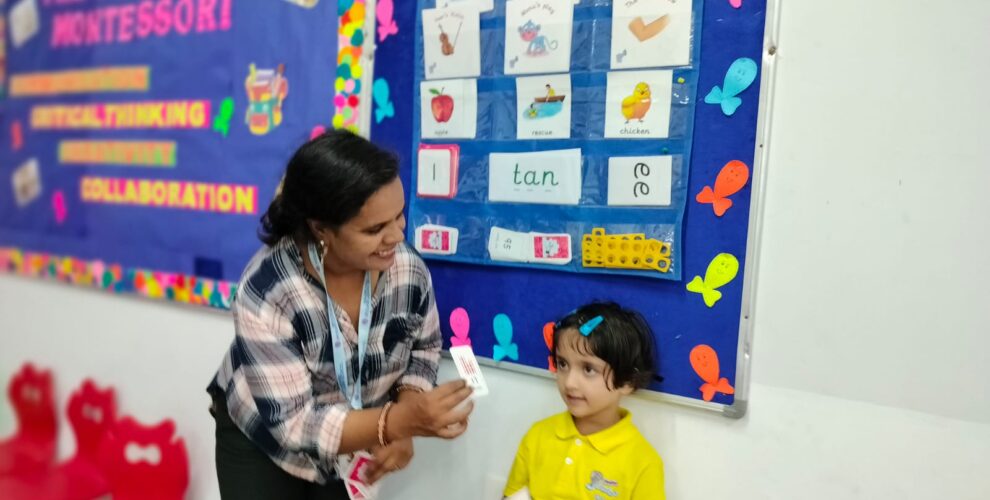
The environment of education is changing dynamically in recent years. If we compare traditional, teacher-led classroom with today’s modern, child- cantered environment then we can find this shift easily. Imagine a classroom from our childhood memory where children used to sit silently and copying from the board versus on where they do explore, question and learn through various activities.
This current environment support them to develop love for learning. This kind of curriculum uniquely nurtures curiosity, creativity and confidence of each child and keeps them away from rote memorization. Early classes are important for every child as they are the early grades shape lifelong habits like critical thinking and problem solving. It is true that when children start enjoying learning in early years then they definitely grow as problem solvers in life.
What is Child-Centered Curriculum?
When a curriculum keeps child at the heart of learning, focuses on children’s age appropriate interests, pace, abilities and learning styles then it is called a child-centered curriculum. In traditional classrooms, syllabus was a fixed document but a child-centered curriculum makes learning meaningful by letting children participate actively in activities which develop their questioning and exploring skills rather than just passive learning.
In traditional classroom environment, the teacher controls the content & pace and all students learn uniformly & monotonously irrespective of their abilities or interests. But child-centered approach is flexible, where teachers are not strict individuals, they act as a facilitator and they adapt the methos to suit each student differently. In child-centered learning approach, children are learn actively as their teachers encourage them for active learning and participation in discussions, projects and hands-on experiences. By this approach, a strong foundation for lifelong learning is established as children develop critical thinking, confidence and curiosity.
Key Characteristics of Child Centered Curriculum
Now question from parents is that how to identify whether a curriculum is child-centric or not? If a curriculum has following key characteristics then it is tailored for experiences of each and every child-
a) Learning by doing (Experiential learning):
Learning by hands-on experiences is always better than by just listening. For example, if a teacher wants to explain about plant growth by just teaching in books then it should be less effective then the child-centered curriculum where growth of plants is made easier by allowing kids to plant seeds, to water them and to observe its growth, instead of just teaching in books. This learning by doing approach makes concepts real and easier to understand.
b) Flexible teaching methods:
Teaching methods should not be fixed, they are adapt based on learning of children. For example, some children learn through stories while some through activities. So a teacher might explain the same concept using a video, or by a game, or by a role-play. It all depends upon child’s response.
c) Focus on individual growth:
Pace of progress of each child is unique and different. So instead of comparing them with others, the focus of a child-centered approach is on personal development. For instance, one child might take longer time to develop reading skill while the other excels into this quickly. They both should be supported as per their needs.
d) Encouragement of curiosity and creativity:
In a child-centered approach, kids are encouraged to ask questions freely and then to become independent thinkers. For example, if a child asks “why is the sky blue?”, the teacher helps in exploring answers by discussions or experiments, rather than dismissing the question in the class.
e) Emotional and social development:
Learning is not just done through books. It also includes building relationships and socio emotional skills. Modern curriculum make learning simple by group work or sharing activities. It builds them learn cooperation, empathy and communication.
By these characteristics, modern day educators ensure that academic learning should be enjoyable & meaningful for each child and it should support in nurturing the uniqueness of every child.
Why is Child-Centered Learning Effective in Early Grades?
Brain development occurs in early ages when kids are at peak of their curiosity. They learn things best through active exploration, story telling, play based learning and group tasks. These activities help in building confidence, sense of independence and social skills which supports the strengthening their foundation for future growth.
Advantages of Child Centered Curriculum
- Improves critical thinking skills: Kids do question, analyze and then understand concepts using activities instead of just memorizing.
- Enhances creativity and problem-solving: Activities which are open-ended, encourage innovative thinking and solutions to real life problems.
- Builds stronger teacher-student relationships: Teachers act as facilitators. They better understand the need of each child.
- Encourages lifelong love for learning: Children enjoy learning from an early age because of engaging and meaningful activities.
- Supports emotional intelligence: Children develop empathy and self-awareness by sharing and collaboration.
These advantages of child-centered curriculum ensure holistic development and prepare children for future challenges.
Child-Centered vs Traditional Curriculum: A Quick Comparison
| Aspect | Traditional Curriculum | Child-Centered Curriculum |
| Learning Style | Passive learning (listening, copying) | Active learning (exploring, participating) |
| Approach | Memorization-focused | Understanding and application-focused |
| Pace | Uniform pace for all students | Personalized learning pace |
| Role of Teacher | Instructor (directs learning) | Facilitator (guides learning) |
| Student Role | Passive receiver | Active participant |
This comparison highlights how a child-centered curriculum makes learning more engaging, meaningful, and effective for every child.
Real Classroom Examples of Child-Centered Learning
Child-centered learning comes alive through activities like hands-on math games using objects, storytelling sessions to build language and imagination, and group projects that encourage teamwork and peer learning. These approaches make classrooms interactive, helping children understand concepts better while developing communication, collaboration, and confidence in a natural way.
How Schools Can Implement a Child-Centered Curriculum
- Teacher training: Train teachers to act as facilitators who guide and support rather than only instruct in classrooms so this mindset shift is mandatory.
- Flexible lesson planning: Lessons should be developed on the basis of each students’ interests, pace, and learning needs.
- Using interactive tools and activities: Include games, storytelling, hands-on projects, and discussions to make learning engaging.
- Continuous assessment: Replace one-time exams with regular observations, projects, and feedback to track real progress. Schools should use tools to assess like Greater Noida Podar Learn School.
These steps help create a learning environment that is engaging, inclusive, and focused on each child’s growth.
Conclusion: Building Future-Ready Learners
Now we can conclude here that a child-centered curriculum focuses on interests, pace, and abilities of each individual child, making learning active, engaging, and meaningful. It encourages curiosity, creativity, and confidence through hands-on activities, storytelling, and group learning. This approach builds strong foundations in early years, developing critical thinking, emotional skills, and a lifelong love for learning. Discover holistic, child-focused learning at Greater Noida Podar Learn School — nurturing the uniqueness of every child.