

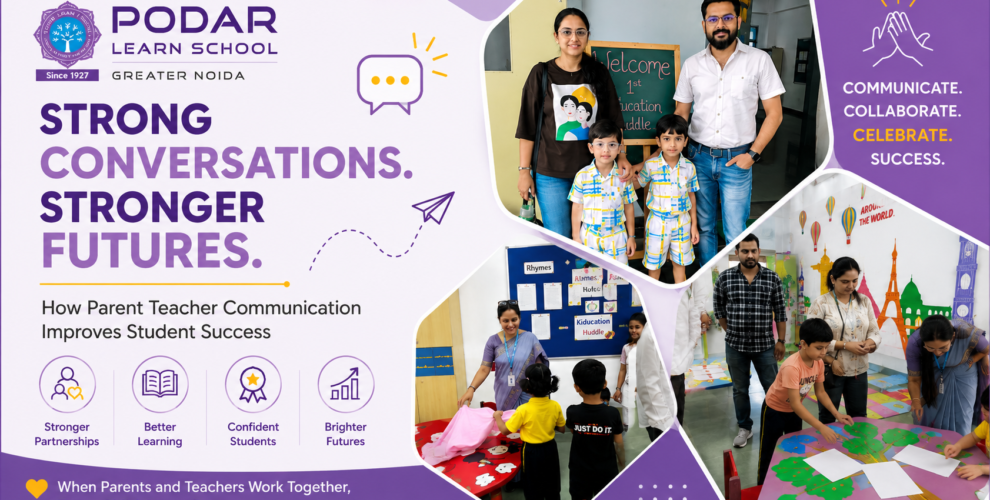
How Parent Teacher Communication Improves Student Success?
Introduction
Have you ever wondered, “Is my child doing well in school?” Or perhaps, “Why is my child suddenly finding this subject difficult?” These are questions many parents have—and sometimes, the answers become clearer when parents and teachers simply talk.
A child’s learning journey does not end when the school day is over. It continues at home, during conversations, homework, play and everyday experiences. While teachers observe a child’s learning, participation and behaviour in the classroom, parents understand their child’s habits, interests, personality and challenges at home.
That is where parent teacher communication becomes so important. When parents and teachers share what they observe, they create a stronger connection between home and school—one that can nurture a child’s confidence, learning, behaviour and overall development.
What Is Parent Teacher Communication and Why Does It Matter?
Parent teacher communication is the regular exchange of information between parents and teachers about a child’s learning and development. The child-centered learning approach can happen through parent-teacher meetings, messages, progress updates, phone calls or simple conversations.
But it is more than just discussing marks.
It is about asking, “How can we help this child do better?”
When communication is open, respectful and consistent, parents and teachers can understand a child more completely and work towards common goals.
The Importance of Parent Teacher Communication in Student Success
The importance of parent teacher communication can be seen in several meaningful ways:
- Identifying learning difficulties early: Teachers may notice challenges with reading, writing, concentration or participation, while parents may observe similar concerns at home. Teachers can also recommend age-appropriate preschool activities at home that allow parents to reinforce classroom learning through play and exploration.
- Tracking academic progress: Regular updates help parents understand what their child is learning, where they are progressing and where additional support may be useful. Understanding the school’s student assessment and progress approach can make these conversations even more meaningful.
- Improving classroom participation: When teachers understand a child’s interests and concerns, they can find better ways to encourage participation.
- Supporting positive behaviour: Sharing observations between home and school can help adults respond to behavioural concerns thoughtfully rather than making assumptions.
- Building confidence: When parents and teachers recognise effort, strengths and small improvements, children feel encouraged to keep trying.
- Creating consistency: Children benefit when home and school reinforce similar positive habits, expectations and approaches to learning.
6 Ways Effective Parent Teacher Communication Improves Student Success
1. Helps Identify Learning Challenges Early
Sometimes, a teacher notices that a child is struggling with reading or staying focused before the concern becomes visible at home. At other times, parents may notice difficulties with homework or confidence first.
Sharing these observations early allows both sides to understand the child’s needs and provide timely support.
2. Creates Consistent Support at Home and School
Imagine a teacher recommends reading for 15 minutes every day. When parents continue that routine at home, the child receives the same message: reading matters. Parents can reinforce what children learn at school by creating good study habits at home and maintaining consistent learning routines.
Such consistency helps children develop positive habits and understand that learning is a shared priority.
3. Builds Student Confidence and Motivation
Children need encouragement, not just correction.
When teachers and parents communicate about a child’s strengths and celebrate small improvements, children begin to recognise their own progress. Knowing that the important adults in their lives are working together can make them feel secure, valued and motivated.
4. Improves Academic Performance
Regular conversations can help parents understand exactly where their child needs support. Teachers can suggest practical strategies, while parents can reinforce them at home.
Communication alone cannot guarantee higher grades, but it creates a valuable support system that can help children stay on track.
5. Supports Better Behaviour and Emotional Development
A sudden change in behaviour, friendships, participation or mood should not always be viewed simply as “bad behaviour.”
A teacher may notice one change at school, while a parent may notice another at home. When they communicate, they can look at the complete picture and respond with greater understanding.
6. Helps Teachers Understand the Child Better
Every child is different. Parents can tell teachers about their child’s interests, personality, routines, strengths and challenges.
This information can help teachers create learning experiences that feel more personalised, supportive and meaningful for the child.
Parent Teacher Meetings: How to Make Every Conversation More Meaningful?
A productive meeting does not have to be complicated. A little preparation can make the conversation much more valuable.
Before the Meeting
- Note down your concerns.
- Review homework and school updates.
- Prepare specific questions.
During the Meeting
- Ask about academic progress.
- Discuss strengths as well as challenges.
- Ask about participation and behaviour.
- Understand how your child interacts with peers.
After the Meeting
- Agree on one or two practical next steps.
- Follow the suggested strategies at home.
- Check in again after an appropriate period.
Building a Stronger Learning Journey Together
A child has two worlds of learning—home and school. Parents know the child beyond the classroom. Teachers see the child discover, participate, struggle, improve and grow alongside others.
When these two perspectives come together, something powerful happens: the child feels that the adults around them are not working separately—they are working together. Parents can also apply the same approach when evaluating a school by considering the questions parents should ask before admission about teaching, communication and their child’s development.
That is the true importance of parent teacher communication. It is not about waiting for a problem to appear or discussing marks once a term. It is about building a relationship where questions can be asked, achievements can be celebrated and challenges can be addressed with understanding.
Because sometimes, the most important step towards a child’s success is simply making sure that home and school are on the same team.
Ready to Be Part of Your Child’s Learning Journey?
At Greater Noida Podar Learn School, we believe meaningful education grows through meaningful partnerships. When parents and educators connect, children receive more than academic support—they receive encouragement, understanding and a stronger foundation to grow with confidence.
Want to discover a learning environment where your child’s growth is a shared priority? Explore Greater Noida Podar Learn School and take the first step towards building a brighter learning journey together. Contact us for admission enquiries today.